


The Architectural Power of the Feature Wall

In contemporary residential architecture, restraint is increasingly becoming a defining design strategy. Rather than covering every surface with expensive materials, architects are focusing attention—directing the eye toward carefully chosen focal elements that shape the spatial experience. One of the most effective of these is the architectural feature wall.
A feature wall is not decoration. When used correctly, it becomes the visual anchor of a room—establishing hierarchy, grounding the composition, and introducing material character.
Creating Spatial Hierarchy

Architecture relies on hierarchy. Just as a building façade has a primary entry and secondary elements, interior spaces benefit from a clear focal point.
Without one, rooms often feel visually flat.
A well-designed feature wall provides orientation. It naturally draws the eye and establishes the primary direction of the space. This is particularly important in open-plan living areas where multiple functions share a single volume.
When the eye has somewhere intentional to land, the entire room becomes easier to read.
Material as Experience

Timber feature walls bring something additional: tactile material presence.
Unlike paint or plasterboard, timber carries depth, grain, shadow, and natural variation. Light interacts with it throughout the day, revealing subtle shifts in tone and texture.
Charred timber, brushed finishes, or embossed textures amplify this effect. The surface becomes an active part of the architecture rather than simply a background.
The wall becomes something you experience, not just something you see.
A Strategic Response to Budget Pressure
On the Left Restraint allows each material to perform its role. By concentrating timber in specific moments, the space gains clarity, balance, and architectural intent. On the right we see the applying a premium material across every surface removes hierarchy and flattens the space. What should feel considered instead becomes uniform, diluting both impact and value.
In the current economic climate many projects face inevitable budget adjustments. When that happens, design quality is often the first casualty.
Feature walls provide a powerful countermeasure.
Instead of spreading expensive materials thinly across an entire house, architects can concentrate them in key locations:
• entry moments• living room anchor walls• stair voids• indoor-outdoor transition zones
By focusing resources in these high-impact areas, the project retains a sense of architectural intention even as overall material budgets tighten.
In many cases, 1 or 2 well-placed timber feature walls can elevate an otherwise simple interior and create a feeling of intentional design.
The Impact Zone
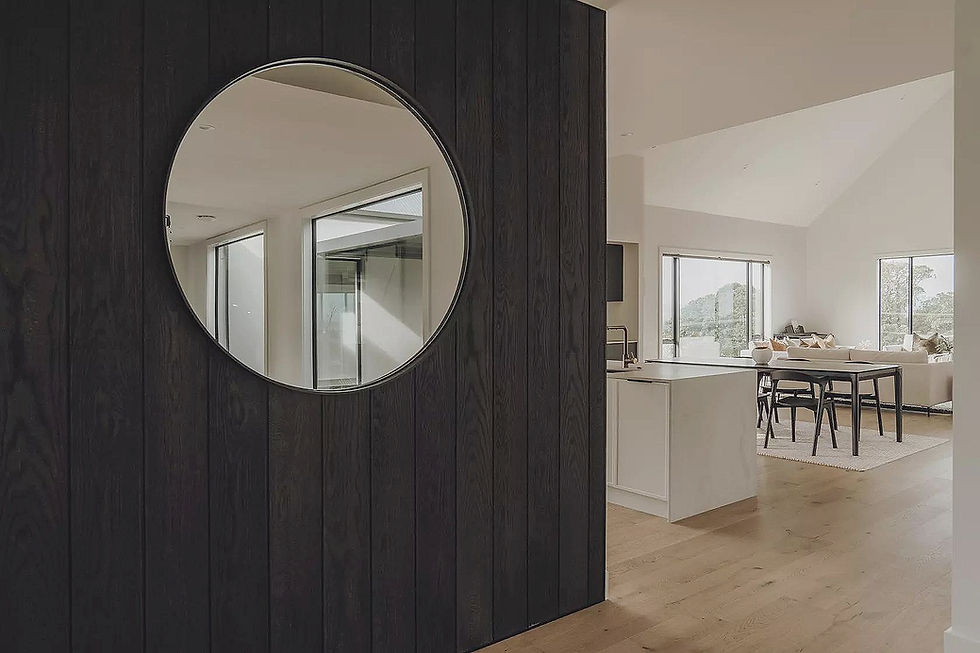
Designers increasingly talk about “impact zones”—those moments in a building where material and detail carry the greatest emotional weight.
A visitor rarely remembers every wall in a house. They remember the moment they walk through the door, the wall framing the fireplace, or the textured backdrop behind the dining table.
These are the places where material investment delivers the greatest return.
Architecture Through Focus
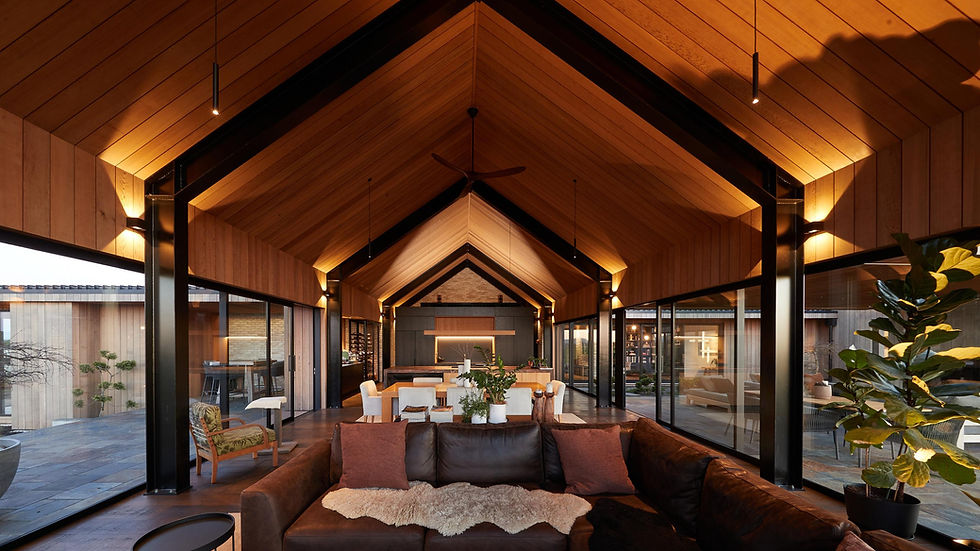
Feature walls are not about adding more—they are about doing less, with intent.
The difference between a considered space and an average one is rarely the material itself, but how it is used. When timber is applied everywhere, it loses its impact. When it is placed with precision, it defines the space.
The most effective interiors are not those with the most material, but those with the clearest idea.
A well-placed timber feature wall does exactly that—creating hierarchy, anchoring the composition, and ensuring the architecture remains legible, even when everything else is restrained. The goal isn’t to use more material. It’s to know exactly where it matters.

Comments